Santa Clara County Public Records provide official documentation created or maintained by county government offices. These records reflect public actions, legal proceedings, and administrative activity handled within Santa Clara County Court. Residents, researchers, and businesses rely on this information to review government operations. The records support transparency across county departments.
Santa Clara County Public Records include a wide range of government records tied to courts, property, and public agencies. These materials help confirm facts, verify filings, and track decisions made by local authorities. State law shapes how records are created and shared. County offices follow these rules to keep public information available and reliable.
How to Obtain Santa Clara County Public Records
Santa Clara County public records are available through official county systems and offices. The process depends on record type, format, and the office that maintains the file.
Records requests follow clear procedures set by county departments. Each method helps the public locate records through verified sources.
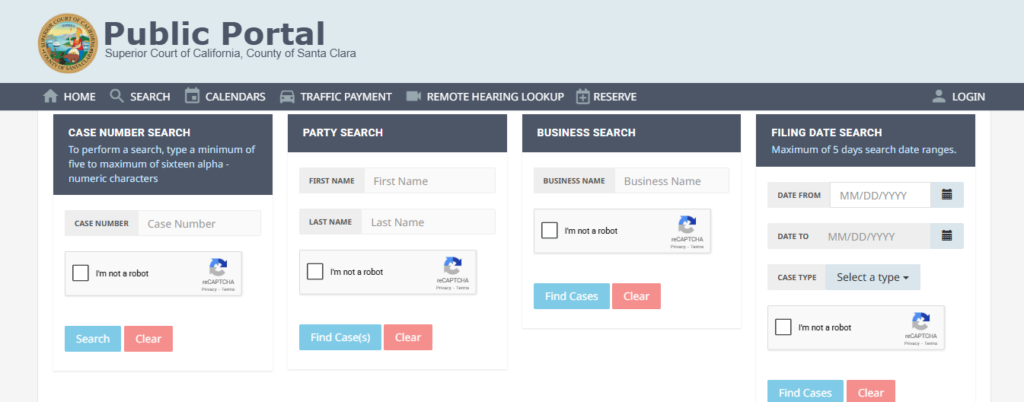
Court Records (Case Info Online)
- Open the Santa Clara County Superior Court official site:
https://santaclara.courts.ca.gov - Click Online Services or Case Information Online (this is the court’s case search portal).
- Choose the case type you want (civil, criminal, probate, traffic, etc.).
- Enter:
- A case number if known (fastest option)
- OR the party’s name (person or business)
- Review the results shown on screen. You’ll see basic details like case status or filings.
Property & Land Records
The County Clerk-Recorder maintains official land and property records (deeds, maps, etc.).
- Go to the Santa Clara County Clerk-Recorder website:
https://clerkrecorder.santaclaracounty.gov - Select Official Records or Services.
- You’ll find steps to request searches, real estate documents, or ordered copies.
Vital Records (Birth, Marriage, Death)
Santa Clara County Clerk-Recorder also issues these.
Visit the Clerk-Recorder main site https://clerkrecorder.santaclaracounty.gov
There you’ll see options for certified copies and ordering instructions.
How to Request Records In-Person
- Go to the courthouse where the case was filed (e.g., Hall of Justice in San Jose).
- Provide:
- Case number or party name
- Title of document requested
- Filing date (if possible)
- Staff will locate the file for inspection or copying.
Property & Vital Records
- Visit the Santa Clara County Clerk-Recorder Office in San Jose.
- Bring valid photo ID.
- Submit your request with key details (e.g., name, date, type of record).
- Pay fees if you need copies.
How to Submit Written Records Requests
Many county departments allow requests by mail or email:
Include payment if copies cost money.
Write your request clearly:
Your full name and contact info
What record you want (court file, property deed, building plans)
Relevant dates, names, or case numbers if available
Mail or email to the specific office that holds the record.
For county administrative records: see the County’s general Request public records page.
https://prc.santaclaracounty.gov/doing-business-county/request-public-records
What is Public Records in Santa Clara County
Public records in Santa Clara County are official documents created or kept by government offices during daily operations. These records exist so the public can review government actions and confirm factual information.
Public records serve as written proof of how county agencies perform their duties. They support record transparency and allow the public to review official activity without barriers outside legal limits.
Public Records Definition in Santa Clara County
A public record includes any material prepared, owned, used, or stored by a county office during public business. Format does not change its status. Paper files, emails, digital databases, audio recordings, and meeting videos all qualify.
Common examples of open records include:
- Court filings and case dockets
- Property deeds and assessment files
- County board agendas and meeting minutes
- Permits, licenses, and inspection reports
- Contracts and financial records
Document availability depends on state public access laws. Some materials remain restricted to protect privacy, safety, or active investigations. Even with limits, most routine government documents remain available for public review.
Why Public Records Exist
Public records exist to support honest government operations. When records remain open for review, the public gains confidence in local decision-making. This openness helps prevent misuse of authority and supports fair treatment across county services.
Record transparency supports several goals:
- Clear documentation of government actions
- Public trust in county agencies
- Reliable reference material for legal and historical use
- Accountability for public officials
California public access laws require county offices to maintain records and respond to record requests within defined timeframes. Santa Clara County follows these rules across all departments.
Who Maintains Santa Clara County Public Records
Each county office manages records related to its duties. The Superior Court maintains court records. The County Clerk-Recorder manages property and official filings. Health departments oversee approved vital records. Administrative offices maintain meeting records and policy documents.
Legal Framework Governing Public Records Access
Santa Clara County public records follow clear legal rules set by California law. These rules explain which records the public may review, how requests work, and when limits apply.
The legal structure behind public records supports openness while protecting private details. It balances public review rights with lawful restrictions tied to safety and privacy.
California Public Records Act
The California Public Records Act (CPRA) serves as the primary law governing open records in Santa Clara County. This statute states that government documents belong to the public unless a legal exemption applies. Agencies must treat disclosure as the standard position.
CPRA covers records held by county offices, courts, boards, and departments. The law applies to paper files, electronic documents, emails, and stored recordings. Freedom of Information principles shape this system by promoting visibility into government activity.
Disclosure rules guide how agencies respond to requests. Offices must search for responsive records and confirm whether documents exist. Written explanations must follow if records cannot be released in full.
Public Rights Under Public Access Laws
CPRA grants the public clear rights related to document review. Any person may request public records without stating a reason. Citizenship or residency status does not affect this right.
Key public rights include:
- The right to request identifiable government records
- The right to receive a response within set time limits
- The right to review non-exempt portions of records
- The right to written explanations for withheld content
Agencies may charge limited fees tied to copying or data production. Inspection of records often remains free when no duplication occurs.
Timeframes, Duties, and Legal Limits
County agencies must respond to CPRA requests within ten calendar days. This response confirms record availability or explains why more time is needed. Extensions apply in defined cases, such as large record volumes.
Some records include sensitive data. Exemptions allow agencies to withhold or release redacted records. Redaction removes protected details while preserving public content.
Common exemptions involve:
- Personal privacy details
- Active law enforcement files
- Security-related information
- Attorney-client communications
Types of Santa Clara County Public Records Available
Santa Clara County maintains many categories of public records created through government activity. Each record type serves a clear purpose and supports public review of county operations.
These records help residents confirm legal facts, review public actions, and verify official events. Availability depends on record type, legal status, and privacy rules set by state law.
Court Records
Public court records in Santa Clara County document legal cases handled by the Superior Court. These records show how cases progress and how courts apply the law. Many people use court documents for legal research, background review, or case follow-up.
Public court records Santa Clara include filings, motions, rulings, and final judgments. A case lookup often begins with a party name or case number. Court clerks manage these files under state retention rules.
Criminal cases involve charges filed by prosecutors against defendants. Records may include complaints, court dates, plea entries, and sentencing outcomes. Access may change if a case remains active or sealed by court order.
Civil cases cover disputes between private parties. These may involve contracts, personal injury, or property disagreements. Civil court documents show claims, responses, and court decisions.
Family court records relate to legal matters within families. Common examples include divorce filings, child custody cases, and support orders. Many family records carry limits to protect private details, though case summaries may remain public.
Probate records involve estates, guardianships, and trusts. These files show how assets transfer after death or how courts assign legal responsibility. Probate court documents often support financial or historical research.
Criminal Records
Criminal records in Santa Clara County reflect a person’s interaction with the criminal justice system. These records document arrests, charges, case outcomes, and sentencing history.
Criminal records Santa Clara County often include arrest records created by law enforcement agencies. An arrest record shows the date, charge, and booking agency. Arrests do not confirm guilt and may not lead to conviction.
Conviction records show final case results after court review. These records list offenses, penalties, and case status. Record status may change through dismissal, expungement, or sealing under state law.
Common criminal record elements include:
- Arrest dates and charge descriptions
- Case numbers and court locations
- Disposition outcomes
- Sentencing details
Law enforcement agencies maintain arrest data. Courts manage conviction records. Access depends on privacy laws and record classification.
Property and Land Records
Property records document land ownership and real estate activity within Santa Clara County. These records support legal ownership, taxation, and land use planning.
Property records include deeds, liens, and transfer documents. A deed records the legal transfer of ownership between parties. Ownership history helps confirm title changes over time.
Land records show parcel boundaries, zoning data, and recorded maps. These records assist buyers, lenders, and researchers reviewing land use.
The County Clerk-Recorder manages recorded property documents. The County Assessor maintains assessor data tied to property value and tax assessment.
Common property record types include:
- Grant deeds and quitclaim deeds
- Ownership history reports
- Parcel maps
- Assessor valuation files
These records support real estate transactions, tax review, and legal verification.
Vital Records
Vital records document major life events recorded by Santa Clara County. These records confirm identity, family relationships, and legal status.
Birth records confirm a person’s date and place of birth. Marriage records show legal unions registered within the county. Divorce records reflect court-approved dissolution of marriage.
Fees, Processing Time, and Record Availability
Santa Clara County public records follow clear rules for document availability, pricing, and response times. Many records are viewable at no charge, though some copies and certified records require payment.
Public access varies by record type and format. Digital viewing often remains free through official systems, while physical or certified copies involve standard fees.
Free Access Versus Paid Records
In many cases, the public may review records without cost. Online case summaries, meeting agendas, and basic filing details usually appear at no charge. On-site record inspection at county offices often carries no viewing fee.
Payment applies when copies are requested. Fees cover staff time, duplication materials, and certification services. Certified records include official seals and signatures used for legal purposes.
Free access typically includes:
- Online case status views
- On-site record inspection
- Public meeting documents
Paid services apply to copies and special formats.
Copy Costs and Certified Records
Public records fees depend on the record type and copy method. Standard paper copies usually cost a small per-page amount. Digital copies may cost less, depending on file size and delivery method.
Certified records cost more due to verification steps. These records serve legal and official needs such as court filings or identity confirmation.
Common fee factors include:
- Number of pages
- Certification status
- Delivery method
- Staff retrieval time
Fee schedules are set by county departments and follow state law.
Processing Timelines and Record Status
Processing timelines vary based on request type. Simple online searches produce immediate results. Copy requests require staff review and preparation.
Typical timeframes include:
- Online viewing: immediate
- In-person copy requests: same day or several days
- Written requests: response issued within ten calendar days
County Clerk’s Office
Address: 70 W Hedding St, San Jose, CA 95110
Records: Birth, marriage, divorce, death certificates, and vital records
Website: https://clerkrecorder.santaclaracounty.gov
Santa Clara Superior Court
Address: Hall of Justice, 191 N. First Street, San Jose, CA 95113
Records: Criminal, civil, probate, and family court records
Website: https://www.scscourt.org
Assessor’s Office
Address: 70 W Hedding St, San Jose, CA 95110
Records: Property and land ownership records
Website: https://www.sccassessor.org
Recorder’s Office
Address: 70 W Hedding St, San Jose, CA 95110
Records: Deeds, liens, and other recorded documents
Website: https://clerkrecorder.santaclaracounty.gov
Public Health Department (Vital Records)
Address: 976 Lenzen Ave, San Jose, CA 95126
Records: Birth, death, and marriage certificates
Frequently Asked Questions
Below are common public records FAQs that explain who may request records, how current the data is, and how records may be used. These answers address frequent concerns related to background checks and legal use.
Who may request Santa Clara County public records?
Any person may request public records held by Santa Clara County offices. No proof of residency, citizenship, or purpose is required. Requests may come from residents, researchers, businesses, or legal professionals. County departments treat all requests equally under state public records law.
Do requesters need to explain why they want the records?
No explanation is required. A requester only needs to describe the records clearly. The law focuses on record identification, not the reason behind the request.
Are Santa Clara County public records always current?
Most records reflect the latest information available at the time of filing. Some records update daily, such as court case status. Others update after processing or approval steps. Delays may occur for active cases, pending filings, or records under review.
May public records be used for background checks?
Yes, many people use public records for background review purposes. Court records, property filings, and criminal case outcomes often support screening needs. Arrest records do not confirm guilt, and record status may change through dismissal or sealing.
Can public records be used for legal purposes?
Public records may support legal filings, research, and verification. Certified records are required for formal legal use. These copies include official seals and signatures that confirm authenticity.
Are all records released in full form?
Some records include private or protected details. In these cases, agencies issue redacted records. Redaction removes restricted information while preserving public content.
Do sealed or expunged records appear in searches?
Sealed or expunged records do not appear in public searches. Court orders control the visibility of these records. Only authorized parties may review them.
How long does it take to receive requested records?
Online record viewing often appears immediately. Copy requests may take several days. Written requests receive a response within the legal timeframe set by California law, based on request scope and record type.