Santa Clara County Probate Court serves as the legal forum for estate and trust matters within Santa Clara County. It manages court-supervised estate cases after a death or loss of capacity. The court applies California probate law to confirm lawful asset handling. Judges review filings to keep each case orderly and transparent. Heirs, beneficiaries, and creditors receive structured legal protection. This process supports fair outcomes across all probate filings.
Santa Clara County Probate Court holds clear probate court jurisdiction over a decedent estate and related proceedings. It oversees executor appointments and validates wills when required. The court resolves estate disputes through formal hearings. Trust administration cases receive judicial review when conflicts arise. Conservatorship and guardianship matters fall within its authority. These functions keep estate settlement consistent and legally sound.
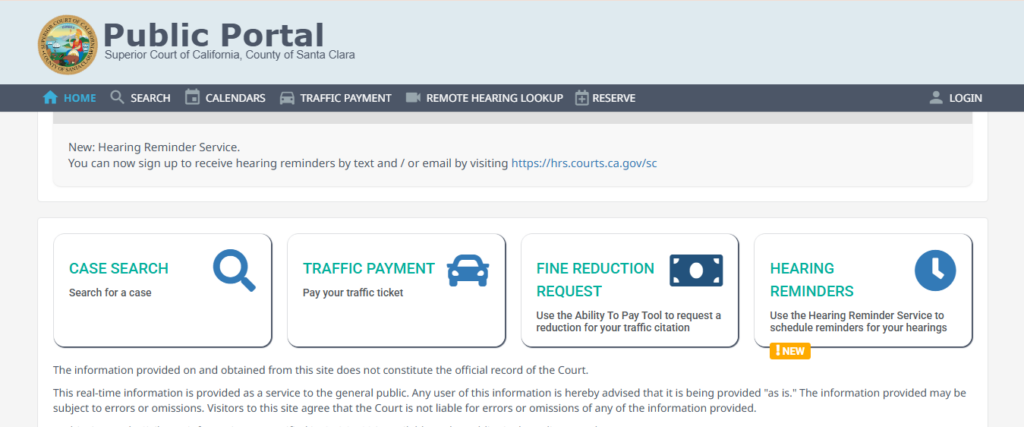
How to Search Santa Clara County Probate Court Records
Open the official Superior Court of California, Santa Clara County case information page:
https://santaclara.courts.ca.gov/online-services/case-information-online
This is the official case lookup portal where you can view basic public information about probate cases.
Select the Case Information Portal button on the page.
Once the portal loads, enter search details such as:
- Decedent’s name (the person who passed away)
- Case number (if you already have it)
- Executor or personal representative name
- Any other available detail like estate type
This lets you see the case status and court docket entries related to the probate process.
Review the results.
- You’ll see the probate filings, case status (open/closed), and key dates.
- If you don’t have a case number, start by searching just the name or estimated filing year.
Search Probate Court Records In Person
If the online lookup doesn’t show full documents or you need copies of filings, do an in‑person search:
Go to the Downtown Superior Courthouse in San Jose — this is where the Probate Division is located:
191 North First Street
San Jose, CA 95113
Ask the Probate Clerk’s Office for assistance.
Tell them the name of the decedent, case number, or other info you have.
Show government‑issued photo ID when requested.
Most courts require proof of identity before releasing documents.
Complete any required clerk forms listing the specific case or documents you want to review.
This helps the probate clerk locate exact probate filings.
Use public access terminals or ask staff to pull records.
You may view filings onsite or request printed copies.
If You Need Copies of Probate Documents
You can request copies by mail if you cannot visit the courthouse:
Mail to:
Probate Division – Records
Superior Court of California, County of Santa Clara
191 North First Street
San Jose, CA 95113
What Is the Santa Clara County Probate Court?
The Santa Clara County Probate Court is the legal division that oversees matters related to estates, trusts, and protected persons. It operates as part of the broader Santa Clara County Court system and exercises probate jurisdiction under California law.
The probate court santa clara county serves a focused role within the county’s judicial authority. Its primary purpose centers on legal oversight when property, assets, or personal care decisions require court supervision. This court steps in after a death, during trust disputes, or when a person cannot manage personal or financial affairs.
Role Within the Santa Clara County Court System
The Santa Clara County probate court functions as a specialized branch of the Superior Court of California, County of Santa Clara. It works alongside civil, criminal, family, and juvenile divisions, yet its scope remains limited to probate jurisdiction.
This court handles cases that involve court-monitored decision-making. For example, judges review filings, approve actions, and issue binding orders that protect rights and property. As a result, probate proceedings stay consistent with state statutes and local court rules.
Key responsibilities include:
- Estate administration after a person’s death
- Trust supervision and trust-related disputes
- Guardianships for minors
- Conservatorships for adults needing care or financial support
Each matter receives judicial review to maintain legal oversight and fairness.
Judicial Authority and Probate Jurisdiction
Judges assigned to probate matters hold full judicial authority granted by California law. They interpret wills, resolve claims, and settle conflicts tied to estates or trusts. This authority allows the court to appoint executors, confirm conservators, and approve asset distribution.
Probate jurisdiction extends to both contested and uncontested filings. Some cases move quickly with limited hearings, then others require multiple court appearances and formal rulings. Clear procedures help parties follow required steps and timelines.
Types of Cases Handled by Probate Court
The Santa Clara County probate court handles legal matters tied to estates, trusts, and court-supervised care. These cases fall under probate jurisdiction and require judicial authority to protect property, rights, and lawful decision-making.
Within the Santa Clara County Court system, probate cases focus on oversight rather than punishment or liability. Judges review filings, approve actions, and issue orders that guide estate settlement and personal care decisions. Each case type follows defined statutes and court rules, which keeps outcomes consistent across probate estates.
Common probate court case categories include:
- Estate administration after a death
- Trust proceedings, including disputes and instructions
- Guardianship cases involving minors
- Conservatorship matters for adults needing support
Each category places responsibility on court-appointed parties, with ongoing review from the court.
Estate Administration Cases
Estate administration cases address the legal process that follows a person’s death. The probate court supervises probate estates to confirm that assets transfer according to a valid will or state law.
A central part of these cases involves executor responsibilities. The executor, sometimes called a personal representative, manages estate settlement under court supervision. This role includes collecting assets, paying approved debts, and preparing reports for judicial review.
Typical steps in estate administration include:
- Filing a petition to open the probate estate
- Validating the will, if one exists
- Identifying heirs and beneficiaries
- Managing estate property and accounts
- Distributing assets after court approval
Judges review each filing to confirm compliance with probate jurisdiction rules. This structure protects heirs, creditors, and beneficiaries during estate settlement. Court oversight continues until the executor completes all required duties and the estate closes by formal order.
Wills and Trusts
Wills and trusts cases focus on court review of written instructions that control property after death. The probate court reviews probate filings to confirm that testamentary documents meet legal standards and reflect valid intent.
When a will enters probate, the court examines its execution, signatures, and filing date. Judges then confirm who has authority to act for the estate. Trust matters follow a related path, yet trust administration often continues without full probate unless disputes arise or court direction is requested.
Common wills and trusts matters include:
- Validation of testamentary documents
- Interpretation of will or trust terms
- Petitions for instructions during trust administration
- Objections raised by heirs or beneficiaries
Judicial authority helps settle disagreements and clarify responsibilities. Court involvement keeps trust administration aligned with state law and recorded filings. Through this process, assets move according to written instructions rather than informal claims.
Guardianship and Conservatorship Cases
Guardianship cases address court-supervised care for minors or adults who cannot manage personal or financial affairs. These matters fall under probate jurisdiction and involve ongoing legal oversight.
Legal guardianship applies when a minor needs a responsible adult to handle daily care, education, or health decisions. The court reviews petitions, appoints a guardian, and monitors required reports. This supervision protects the child’s welfare and property.
These cases often include:
- Appointment of a guardian or conservator
- Review of care plans and financial accounts
- Court approval for major decisions
Probate Process in Santa Clara County
The probate process in Santa Clara County follows a court-supervised path for settling estates after a death. It relies on formal probate filings, judicial review, and ongoing fiduciary duties tied to estate property.
This process takes place within the Santa Clara County probate court and follows California probate law. Each step builds on the last, which helps the court track actions, protect heirs, and manage estate settlement in an orderly way.
Filing the Probate Petition
The process begins with a probate petition filed with the court. This document requests appointment of a personal representative and opens the case under probate jurisdiction.
The petition usually includes basic estate details, estimated asset values, and names of heirs or beneficiaries. Once filed, the court assigns a case number and schedules court hearings. These filings form the official record for the probate estate.
Key details in this stage include:
- Decedent information
- Will status
- Proposed executor or administrator
- Estimated estate value
Court Review and Appointment
After the petition is filed, the court reviews submitted documents. A judge confirms legal compliance and addresses any objections raised by interested parties.
Court hearings play a central role at this point. During the hearing, the judge may appoint the executor named in the will or select an administrator when no will exists. This appointment grants authority to act for the estate.
Once appointed, the representative receives formal court letters that confirm legal authority. These letters allow the representative to manage estate property under court oversight.
Notice and Estate Inventory
Next, the personal representative must notify heirs, beneficiaries, and known creditors. Notice requirements follow strict timelines and filing rules within Santa Clara County.
An inventory and appraisal follows. This step lists estate assets and assigns values, often with help from a court-appointed appraiser. The court reviews this inventory to confirm accurate reporting.
This stage supports fiduciary duties by creating a clear asset record. It reduces disputes and supports transparent estate settlement.
Managing Debts and Ongoing Duties
Estate administration continues with payment of valid debts and expenses. The representative reviews claims, pays approved obligations, and maintains estate accounts.
Fiduciary duties guide every action at this stage. The representative must act in good faith, avoid conflicts, and keep detailed records. Court supervision remains active through required filings and updates.
Common responsibilities include:
- Managing bank accounts
- Handling real property
- Filing tax documents
- Submitting status reports
Court review helps confirm compliance with probate rules.
Distribution and Closing the Estate
The final stage involves asset distribution to heirs or beneficiaries. Distribution occurs only after court approval. The representative submits a final report that outlines actions taken and proposes distribution terms.
Court hearings may occur if questions arise. Once approved, assets transfer according to the will or state law. The court then issues an order closing the probate estate.
Probate Process in Santa Clara County
The probate process in Santa Clara County follows a court-supervised path for settling estates after a death. It relies on formal probate filings, judicial review, and ongoing fiduciary duties tied to estate property.
This process takes place within the Santa Clara County probate court and follows California probate law. Each step builds on the last, which helps the court track actions, protect heirs, and manage estate settlement in an orderly way.
Filing the Probate Petition
The process begins with a probate petition filed with the court. This document requests appointment of a personal representative and opens the case under probate jurisdiction.
The petition usually includes basic estate details, estimated asset values, and names of heirs or beneficiaries. Once filed, the court assigns a case number and schedules court hearings. These filings form the official record for the probate estate.
Key details in this stage include:
- Decedent information
- Will status
- Proposed executor or administrator
- Estimated estate value
Court Review and Appointment
After the petition is filed, the court reviews submitted documents. A judge confirms legal compliance and addresses any objections raised by interested parties.
Court hearings play a central role at this point. During the hearing, the judge may appoint the executor named in the will or select an administrator when no will exists. This appointment grants authority to act for the estate.
Once appointed, the representative receives formal court letters that confirm legal authority. These letters allow the representative to manage estate property under court oversight.
Notice and Estate Inventory
Next, the personal representative must notify heirs, beneficiaries, and known creditors. Notice requirements follow strict timelines and filing rules within Santa Clara County.
An inventory and appraisal follows. This step lists estate assets and assigns values, often with help from a court-appointed appraiser. The court reviews this inventory to confirm accurate reporting.
This stage supports fiduciary duties by creating a clear asset record. It reduces disputes and supports transparent estate settlement.
Managing Debts and Ongoing Duties
Estate administration continues with payment of valid debts and expenses. The representative reviews claims, pays approved obligations, and maintains estate accounts.
Fiduciary duties guide every action at this stage. The representative must act in good faith, avoid conflicts, and keep detailed records. Court supervision remains active through required filings and updates.
Common responsibilities include:
- Managing bank accounts
- Handling real property
- Filing tax documents
- Submitting status reports
Court review helps confirm compliance with probate rules.
Distribution and Closing the Estate
The final stage involves asset distribution to heirs or beneficiaries. Distribution occurs only after court approval. The representative submits a final report that outlines actions taken and proposes distribution terms.
Probate Filings and Court Procedures
Probate filings in the Santa Clara County probate court are official documents submitted to initiate or manage estate, trust, or guardianship matters. They form the backbone of court oversight and ensure legal accountability throughout probate proceedings.
The probate court Santa Clara County handles a variety of filings depending on the type of case and stage of the process. These filings create a clear record of actions, responsibilities, and judicial decisions. Common filing categories include:
- Petitions and applications to open probate or appoint a personal representative
- Inventories and appraisals of estate assets
- Accountings and status reports submitted by executors or trustees
- Motions or objections raised by interested parties
- Final reports and closing documents for estate completion
Each filing must comply with specific filing requirements, including proper forms, supporting documentation, and deadlines. The probate clerk reviews submissions to ensure they meet procedural standards before forwarding them to a judge.
Guardianship and Conservatorship in Probate Court
Guardianship cases arise when a minor or adult cannot manage personal, financial, or medical decisions independently. The probate court provides legal authority and oversight to ensure the welfare and protection of these protected persons.
Guardianship is typically required for minors whose parents are unable or unavailable to make decisions on their behalf. Conservatorship applies to adults who cannot handle finances or personal care due to age, illness, or disability. In both situations, the court assesses evidence, reviews petitions, and appoints qualified individuals to act in the best interest of the person under care.
Key aspects of guardianship and conservatorship cases include:
- Appointment of guardians or conservators after petition review
- Court approval for major decisions regarding finances, healthcare, or living arrangements
- Submission of regular reports to the court
- Removal or replacement of guardians or conservators if responsibilities are not properly met
Inheritance Law in Probate Cases
Inheritance law determines how property and assets are distributed after death. The rules differ depending on whether the decedent left a will or died intestate (without a will).
Estates with a Will
- Definition: A will is a legal document specifying how assets should be distributed.
- Beneficiaries: Named individuals or organizations receive assets as directed in the will.
- Court Role:
- Reviews probate filings to verify the will is valid
- Confirms proper execution of testamentary documents
- Supervises distribution to ensure compliance with wills and trusts
Estates Without a Will (Intestate Estates)
- Definition: When no valid will exists, assets are distributed according to California intestate laws.
- Lawful Heirs: Typically includes spouses, children, parents, or other close relatives.
- Court Role:
- Supervises fair distribution to heirs
- Reviews filings and petitions to confirm compliance with intestate succession rules
- Resolves disputes among heirs if needed
Heirs vs. Beneficiaries
| Term | Definition | Applicability |
|---|---|---|
| Heirs | Individuals entitled to inherit under state law | Intestate estates |
| Beneficiaries | Named recipients in a will or trust | Testate estates |
Public Access and Probate Records
Most probate information filed in the Santa Clara County probate court is available as public court records. However, certain sensitive details may be restricted to protect privacy.
What Probate Information Is Public
- Filing documents: Petitions, inventories, accountings, and notices are generally accessible.
- Court proceedings: Hearings and rulings are typically recorded in public court records.
- Executor or trustee information: Names and contact details often appear in filings.
What May Be Restricted
- Sensitive personal data: Social Security numbers, bank account details, and medical information are usually redacted.
- Minor or protected persons: Guardianship or conservatorship cases may limit full public access.
- Confidential filings: Court orders or agreements filed under seal remain private.
Important Considerations Before Filing Probate
Filing probate in Santa Clara County involves multiple legal steps, takes time, and requires careful attention to legal compliance.
Complexity
- Probate cases often involve multiple assets, debts, and beneficiaries.
- Executors or administrators must follow strict procedures and maintain accurate documentation.
Time
- Probate can take months or even years, depending on estate size and disputes.
- Court hearings, notices, and reporting deadlines influence the overall estate timeline.
Legal Obligations
- Executors or trustees must fulfill fiduciary duties, manage assets responsibly, and submit required filings.
- Failure to comply with court orders can lead to legal consequences or delays
Santa Clara County Probate Court Locations and Contact
The central probate operations of the Santa Clara County probate court are handled at the Downtown Superior Court in San Jose. This is the primary courthouse where most estate and probate matters are filed and reviewed.
Address:
191 North First Street, San Jose, CA 95113
Main Phone: (408) 882‑2100 (Probate Clerk & Court Services)
Office Hours:
- Monday–Thursday: 8:30 a.m. – 3:00 p.m.
- Friday: 8:30 a.m. – 12:00 p.m.
At this courthouse, you can speak with the probate clerk, request probate filings, and access information about court offices and procedures.
Branch Offices and Specialty Departments
While the main probate functions are at the Downtown Superior Court, the broader Santa Clara County court system includes other court facilities that provide related services:
- Family Court – Handles family law cases and related matters in San Jose.
- Morgan Hill Branch Court – Serves the southern county region for general court needs.
- Other facilities may provide general court services but usually do not handle primary probate filings.
The Probate Division primarily manages estate, guardianship, and conservatorship matters at the main courthouse. Specialty departments, such as guardianship intake or trust administration offices, may operate within the same complex to assist with specific legal processes.
If you are filing wills and trusts or seeking documentation for an estate, the Downtown courthouse is the recommended point of contact.
Contact Methods and Assistance
You can contact the Santa Clara County probate court in several ways:
- Phone: Probate Clerk – (408) 882‑2100 (choose the probate option).
- In Person: Visit the Downtown courthouse during office hours for filings or assistance.
- Email or Online Contact Form: Available through the court’s main contact channels for inquiries or appointment requests.
Some visitors schedule appointments when submitting complex filings or needing detailed assistance. Asking the probate clerk ahead of time helps make your visit more efficient.
Frequently Asked Questions
This section answers common questions about Santa Clara County probate court. Whether you are requesting records for legal purposes, genealogy, or personal use, these FAQs provide clear guidance.
What types of cases does the probate court handle?
The Santa Clara County probate court manages cases involving estates, wills and trusts, guardianships, and conservatorships. It oversees the probate process, ensures executor responsibilities are carried out, and reviews all related probate filings to protect heirs and beneficiaries.
How do I file a probate case?
Filing a probate case begins with submitting a probate petition to the court, typically through the probate clerk. This includes providing basic information about the decedent, the estate, and any nominated executor or administrator. Supporting probate filings and documentation are required to open the case officially.
Can I access probate records online?
Many probate records in Santa Clara County are available as public court records through an online case lookup portal. Some documents may require an in-person visit to the courthouse. Online access allows review of the court docket, while in-person requests provide full copies of filings for estate administration purposes.
How long does probate take in Santa Clara County?
The probate process generally takes several months to over a year, depending on estate size and complexity. Steps include filing petitions, reviewing assets, notifying heirs, and completing estate administration. Court supervision ensures fiduciary duties are properly fulfilled before closing the estate.
Do I need a lawyer for probate cases?
Hiring an attorney is optional but often recommended for complex estates. Legal guidance can help executors manage executor duties, ensure proper probate filings, and navigate disputes. Small or uncontested estates may proceed without a lawyer, though careful compliance with court rules is essential.
What is the difference between probate and non-probate assets?
Probate assets pass through the court process and include individually owned property. Non-probate assets, such as trusts, joint accounts, or life insurance with designated beneficiaries, transfer outside the court. Understanding wills and trusts helps with estate administration and compliance with inheritance law.